How to plan a perennial border that blooms from April to October
Groups of three or five, stepped heights, bloom times that hand off to one another and grasses for winter: a method for designing a perennial border.
Claire Donovan · · 4 min read
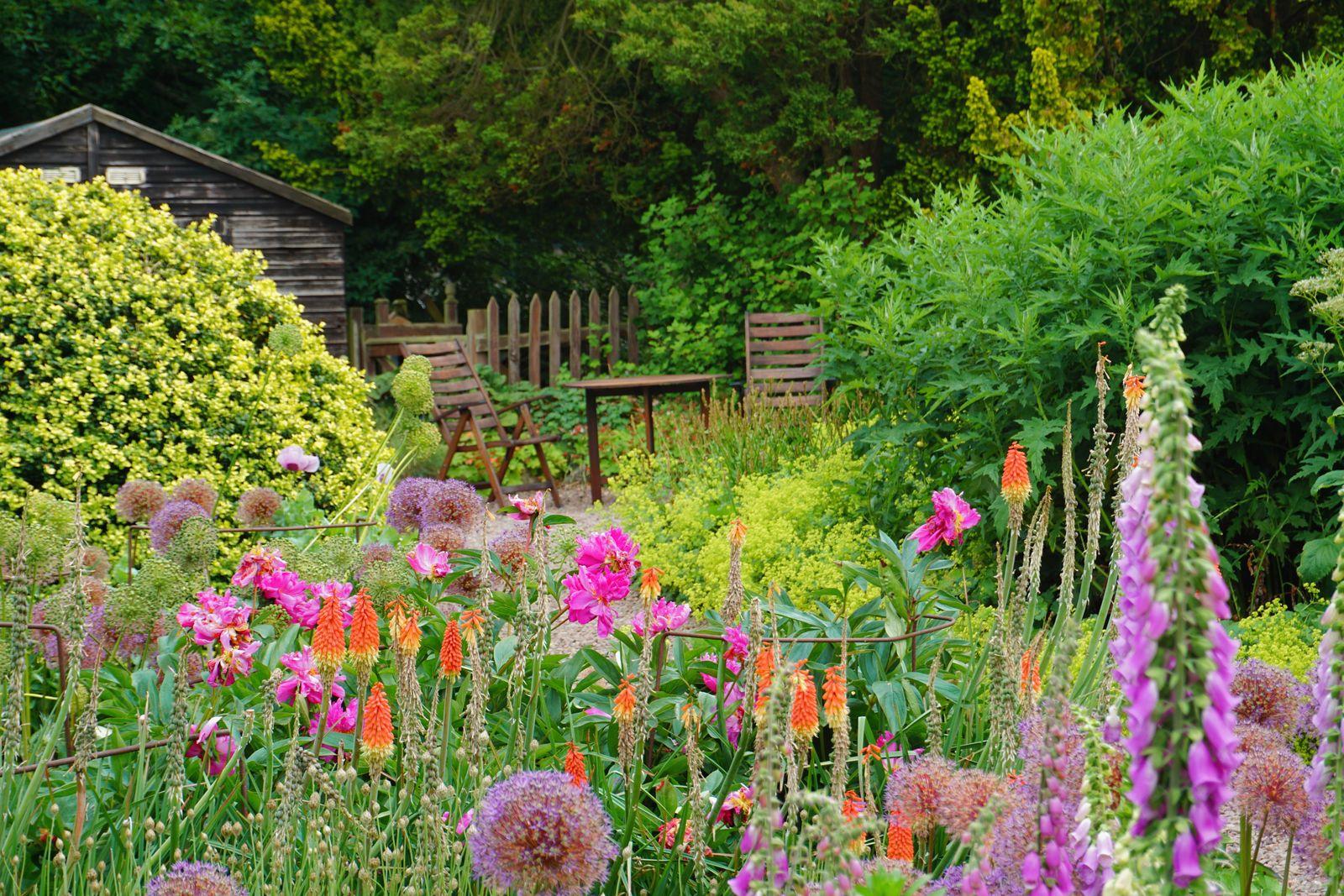
A perennial border doesn’t need a long list of plants. Eight to ten kinds are enough, repeated along the bed and chosen so their bloom times hand off to one another from April to October, with grasses carrying the border through winter.
Perennials are best planted in fall, from September to mid-October in zones 6–7, or in early spring. In April you’re still in time: plant by mid-May and water regularly through the first summer.
The site and the size
Start with the sun: nearly all border perennials want at least six hours of direct sun a day. Then the soil: if water stands for days after rain, raise the bed 6–8 inches and work in plenty of compost.
Before planting, clear out perennial weeds such as bindweed, quackgrass and Bermuda grass, roots and all. Once the perennials have filled in, it’s almost impossible to get them out without digging up your plants too.
Depth matters more than length. A border less than 4 feet deep holds two rows of plants; at 5–6 feet or more you can plant in three tiers, short in front, medium in the middle and tall at the back.
Groups, repeats and heights
- Plant in groups of three or five of the same plant: a group reads from across the yard, while a single plant disappears.
- Repeat the same groups two or three times along the border: repetition sets a rhythm and holds the design together.
- Space them properly: about 12 inches apart for small perennials, 15–18 inches for medium ones and 30–36 inches for large grasses.
- Step the heights: 8–16 inches in front, 20–30 inches in the middle, 3 feet and up at the back.
- Break the rule with see-through plants: airy ones such as gaura, with flowers on thin, wiry stems, can go near the front without hiding anything behind them.
At planting time, set the pots out on the bed following your plan and adjust by eye before you dig. Dunk each pot in a bucket of water until it stops bubbling, plant at the same depth it grew in the pot and water well.
One bloom after another
Divide the season into four stretches and make sure each one has at least two or three groups in flower. Here’s a combination for a sunny border in zones 5–8:
- April–May: tulips and alliums planted among the perennials the fall before, cushion spurge (Euphorbia polychroma), bearded iris.
- May–July: catmint and meadow sage (Salvia nemorosa), which bloom again if you shear them after the first flush; yarrow; Geranium ‘Rozanne’, which keeps going until fall.
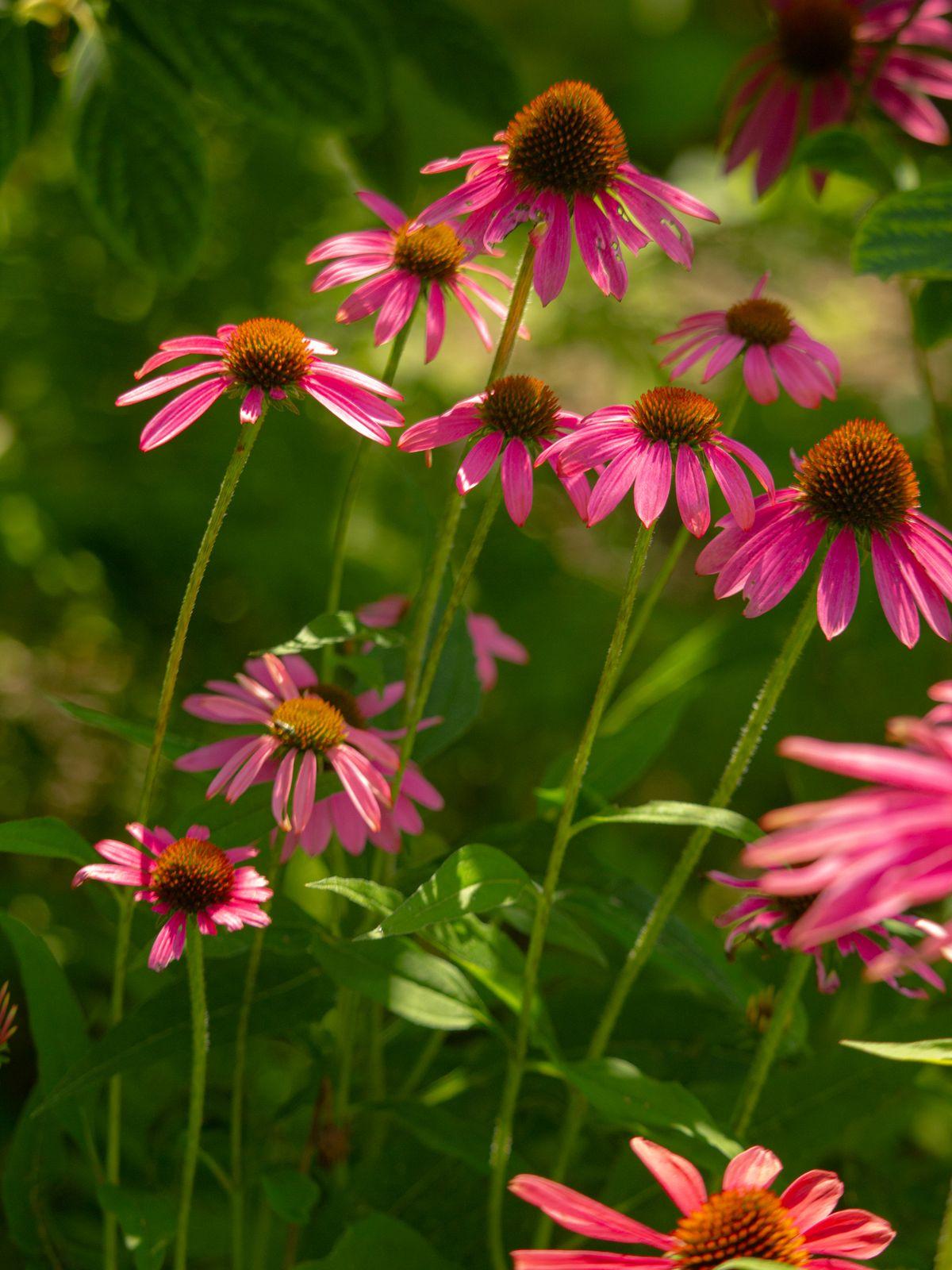
- July–September: coneflower (Echinacea), black-eyed Susan (Rudbeckia fulgida), Russian sage, gaura.
- September–October: New England and aromatic asters, sedum ‘Autumn Joy’, Japanese anemones in part shade, and grasses in bloom such as switchgrass and little bluestem.
If the border is in part shade, change the plants, not the method: bigroot geranium (Geranium macrorrhizum), coral bells, hostas, epimedium and Japanese anemones make a good backbone.
In winter, the grasses hold the border together. Feather reed grass ‘Karl Foerster’, switchgrass and little bluestem stay upright with their seed heads into February, and with frost on them they draw the outline of the bed while everything else is dormant. Leave the coneflower and sedum stems standing too: goldfinches and other birds pick the seeds out of the coneflower heads.
Flowering shrubs and shrub roses also belong in a mixed border, as long as they have room and air around them. If you’d rather have a planting plan drawn for your own yard, that’s what our Bespoke Garden Design Plan is for.
Tip: A photo a month
In the first year, photograph the border from the same spot at the start of every month. In fall, look at the photos side by side: the months without flowers jump out, and you’ll know exactly where to add a group when you replant.
In hot, dry gardens
In the West and Southwest, zones 8–10, plant in fall, from October to December, so the roots grow through the cool, wetter months and the plants go into their first summer established. Choose plants that take drought: salvias, Russian sage, gaura, lavender, yarrow, penstemons, Jerusalem sage (Phlomis fruticosa) and native grasses such as deer grass. Skip asters and garden phlox, which struggle without regular water.
Maintenance: a little, at the right times
For the first two years, spread 2 inches of mulch, shredded bark or compost, to keep weeds down until the plants close the gaps. Water deeply and infrequently the first summer; from the second year on, a border of plants suited to your climate needs water only during long dry spells.
In summer, deadhead yarrow and salvia to stretch out their bloom; leave the spent flowers of coneflower and sedum, which carry the border through winter.
In late winter, from February to early March in zones 6–7 and before new shoots appear, cut everything back to 4–6 inches, grasses included. Every three or four years, divide clumps that go bare in the middle, such as asters and catmint, and replant the younger outer pieces.
Masterclass · 10 hr 3 min
Garden Design Masterclass
Survey, base plan, structure and planting plan: design a garden you can install and maintain
$690
“The first year they sleep, the second year they creep, the third year they leap.”
In the first year the border will look sparse, and that’s normal. Don’t fill the gaps with extra plants, which would be crowded two seasons from now: mark the gaps on your monthly photos and decide in fall what to add.