Yellow leaves on a monstera: finding the cause and fixing it
Too much water, too little light, old leaves or worn-out potting mix: how to read the cause from the way the leaves turn yellow, and what to do about it, starting with the roots.
Marcus Bell · · 4 min read
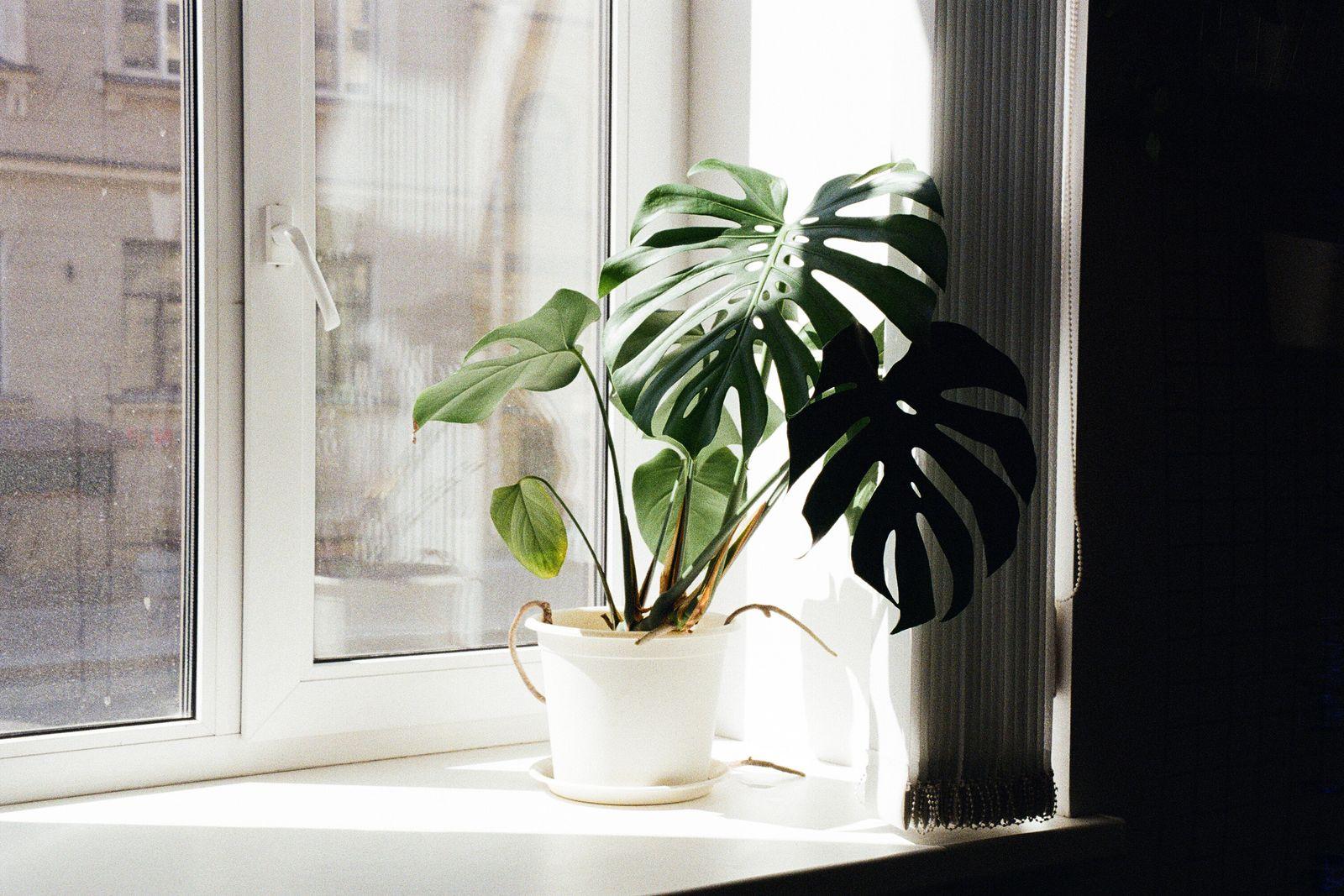
A yellow leaf on a monstera is a symptom, not a diagnosis. Before you water, feed or move the plant, look at three things: which leaves are turning yellow, how they’re turning, and how many there are.
Most of the time the cause is water, especially at this time of year: the days get shorter, the plant uses less and the potting mix stays wet longer. But low light, old age and spent potting mix leave different signs, and it pays to tell them apart.
Read the symptoms
- One lower leaf, evenly yellow, while the new ones come in healthy: an old leaf the plant is letting go. That’s normal.
- Several leaves yellowing at once, soft, sometimes with brown patches, in a mix that never dries out: too much water, probably with the start of root rot.
- Pale leaves, stems stretching toward the window, small new leaves and, on a mature plant, no splits: not enough light.
- Yellowing with dry, crispy edges, and a mix that has shrunk away from the sides of the pot: thirst. It happens less often than people think.
- Old leaves yellowing evenly, no new growth for months, the same pot for years: the potting mix is exhausted.
- Fine yellow speckles and thin webbing under the leaves: spider mites, which thrive in the dry air of a heated home.
Too much water: the most common cause
A monstera wants its potting mix to dry out near the surface between waterings. If the mix stays wet for weeks, the roots run out of air and rot; rotten roots can’t take up water, and the leaves turn yellow as if the plant were thirsty.
The only way to be sure is to look at the roots. Slide the plant out of its pot: healthy roots are pale and firm, rotten ones are dark, mushy and smell musty. Cut away the rotten parts with clean scissors, shake off the soggy mix and repot into something airy, such as two parts houseplant potting mix to one part orchid bark and one part perlite. The pot needs drainage holes, and any water left in the saucer should be poured off after 15 minutes.
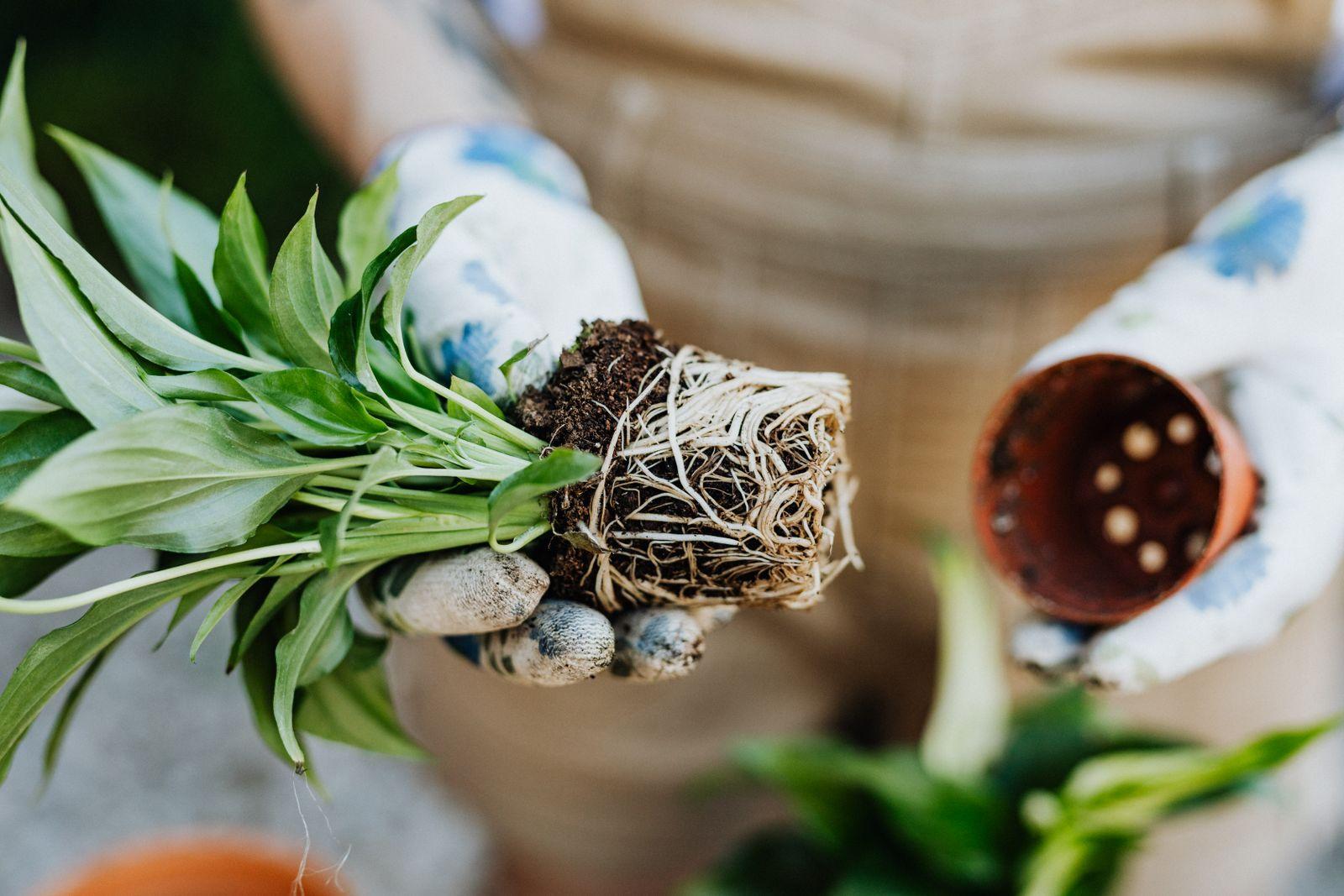
If rot has taken almost all the roots, save the plant with a cutting. Cut a healthy piece of stem with at least one node and one aerial root, root it in water or damp sphagnum moss in a warm room, and pot it up once the new roots are a couple of inches long.
One-to-one · 45 min
Plant Doctor Session
A 45-minute video diagnosis for a struggling plant, with a written treatment plan to follow
$190
Too little light, especially in winter
A monstera grows well 3–6 feet from a bright window, with plenty of light but no direct midday sun in summer, which leaves dry, yellow-brown scorch patches. At the far end of a room it survives, but it uses very little water: the mix stays damp for a long time and you’re back to the first problem. If all you have are dim corners, pick one of the hard-to-kill houseplants that tolerate low light instead.
From October to March, move it closer to the window and water less often. There’s no fixed schedule, because it depends on the pot, the light and the temperature: water when the top 2 inches of mix are dry, and then water thoroughly, until it runs out of the drainage holes. Keep the plant above 60°F and away from heating vents and radiators.
Tip: The chopstick test
Push a wooden chopstick all the way to the bottom of the pot and leave it there for ten minutes. If it comes out with damp soil stuck to it, wait. If it comes out clean and dry, it’s time to water. It reaches where your finger can’t.
Dry air and spider mites
With the heat on, indoor air gets dry, and spider mites can move in: mites so small they’re barely visible, which feed on the leaves and leave them covered in yellow speckles. To check, shake a leaf over a sheet of white paper. If tiny dots start moving, you’ve found them.
Wipe the leaves top and bottom with a sponge and lukewarm water, or give the plant a gentle shower with a plastic bag over the pot, and repeat every week for a month. If that isn’t enough, use an insecticidal soap according to the label, and move the plant away from the heat.
Old leaves and fertilizer
When a single lower leaf turns yellow while the plant keeps putting out healthy new ones, it’s normal: before dropping a leaf, the monstera pulls back the nutrients it holds. Wait until it’s completely yellow, then cut it off at the base of the leaf stalk.
If several old leaves are yellowing and the plant hasn’t grown in months, the potting mix isn’t feeding it anymore. From April through September, give it a liquid houseplant fertilizer every two to three weeks, at the label rate or at half strength, and repot every two or three years into a pot 2 inches wider. Stop feeding in winter: the plant is barely growing, and salts build up in the mix.
A yellow leaf won’t turn green again, whatever the cause. Cut it off with clean scissors, fix what’s wrong and judge the result by the new leaves, not the old ones. If you’d like the same groundwork for the rest of your houseplants, our Indoor Garden Masterclass covers light, watering, potting mixes and pests.