Growing tomatoes on a balcony: containers, varieties, staking and water
How big the container needs to be, which varieties to choose, and how to stake, prune and water tomatoes on a balcony so you’re still picking when the first frost comes.
Marcus Bell · · 4 min read
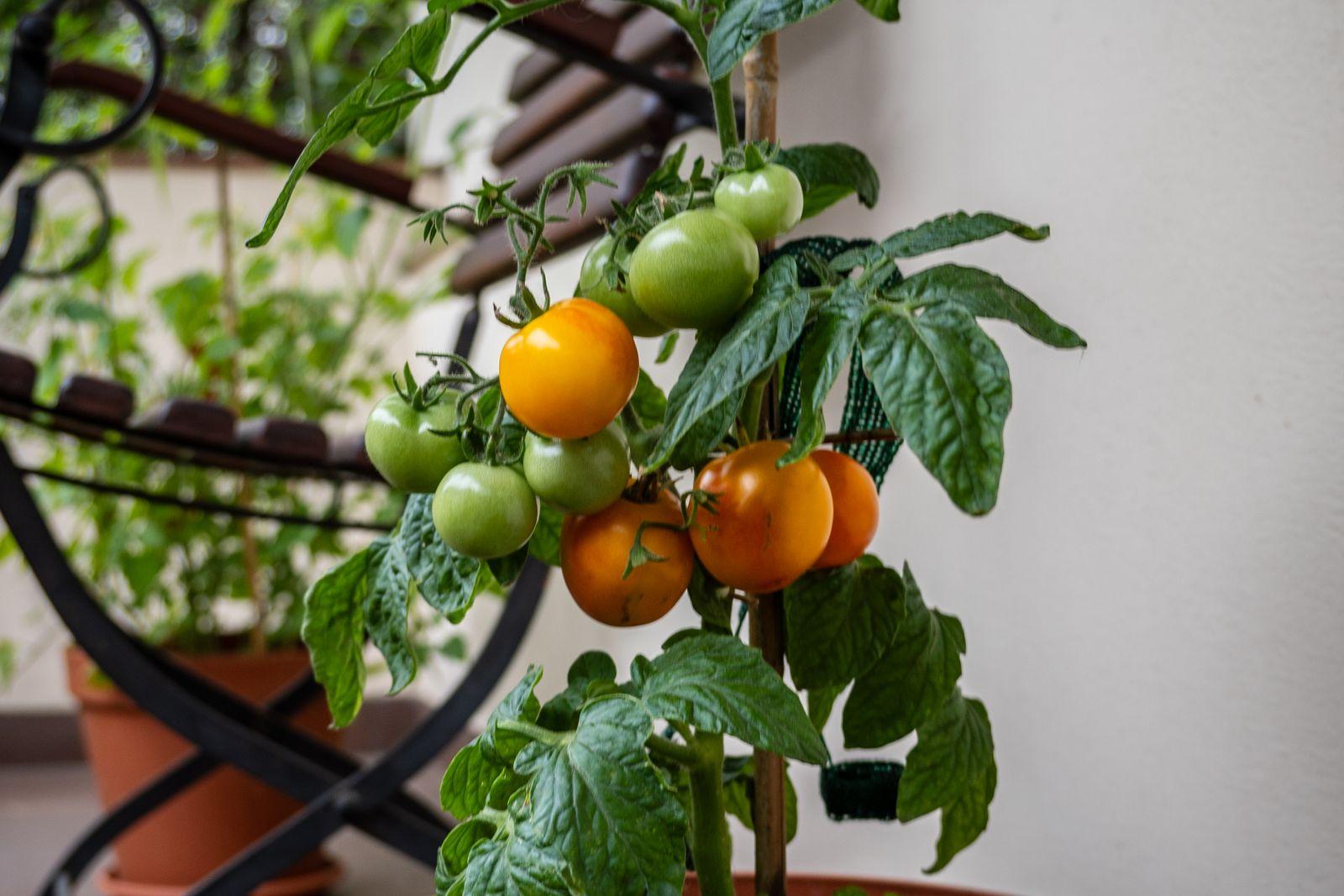
A tomato in a container produces well if it gets three things: plenty of soil, at least six hours of direct sun and steady water. Take away any one of them and the plant still grows, but the fruit comes in scarce, small or black on the bottom.
If you haven’t planted yet, there’s still time: in zones 6–7, buy sturdy transplants from a nursery and get them in by mid-June. Choose an early variety and you’ll be picking from August until frost.
Container, potting mix and sun
An indeterminate variety, the kind that keeps growing and needs a stake, wants a container of at least 10 gallons per plant, about 14 inches deep; in hot-summer climates, 15–20 gallons is better. In smaller pots the soil dries out within hours on hot days, and the plant wilts several times a day.
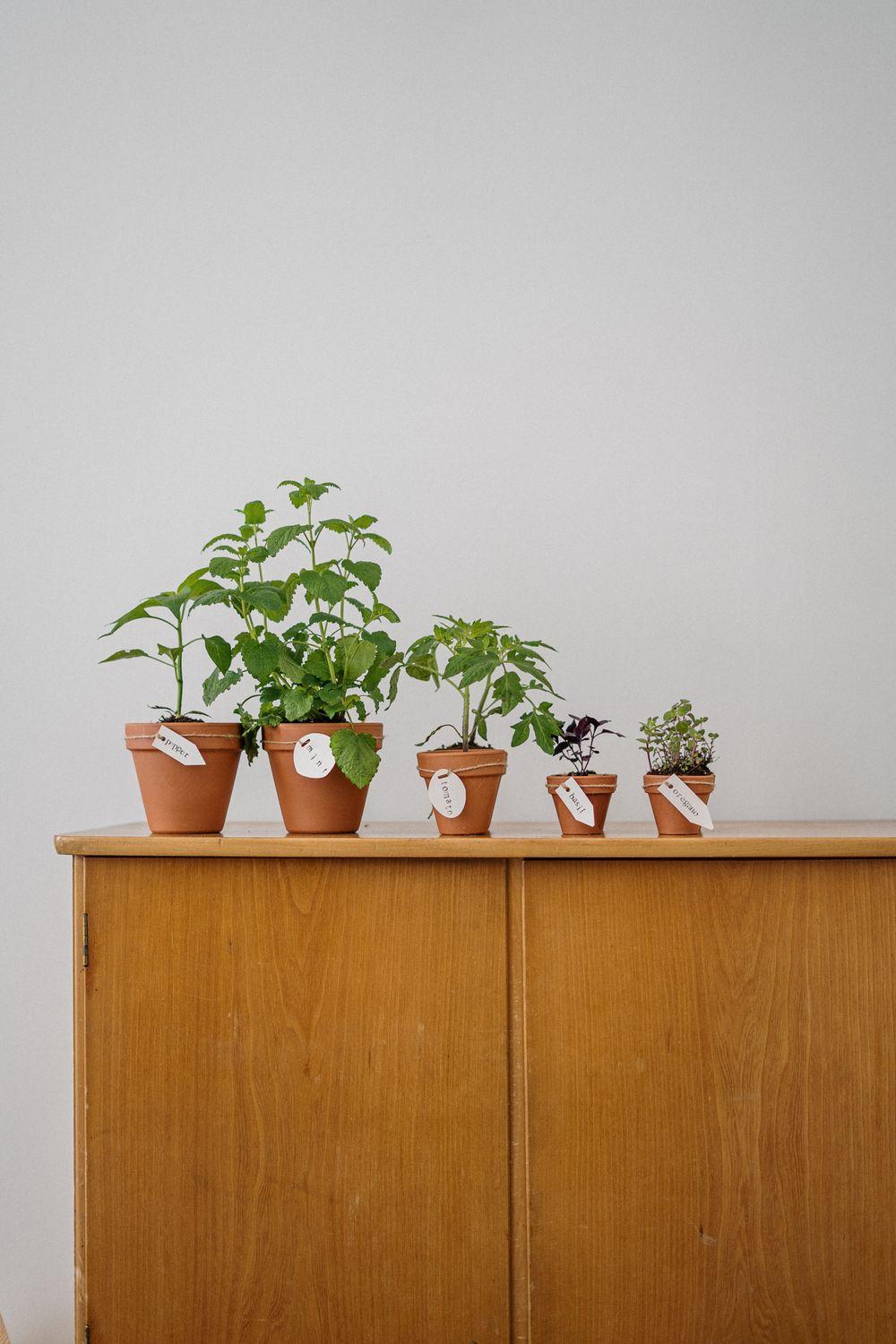
Light-colored or terracotta pots and fabric grow bags stay cooler than black plastic, which heats the roots in full sun; fabric and terracotta dry out faster, so check them more often. Fill them with a good potting mix, never garden soil, blended with about one-fifth compost or worm castings, plus a handful of slow-release organic tomato fertilizer. Skip the layer of gravel at the bottom: it doesn’t improve drainage and it takes up room the roots could use. What matters is that the drainage holes are clear.
The right balcony faces south, southeast or southwest. On a north-facing balcony tomatoes grow but produce little, and you’re better off with herbs and salad greens; for planning a whole balcony harvest, see our book The Small-Space Harvest. On upper floors, wind matters too: it snaps stems and dries out pots, so tie the plants securely and check the soil more often.
Which varieties to choose
- Cherry and grape tomatoes: the best fit for containers. Most are indeterminate and bear clusters of small fruit for months, and the fruit ripens quickly. ‘Sungold’, orange and very sweet, is hard to beat, but it’s vigorous and needs a tall stake.
- Compact and trailing varieties: dwarf and determinate types stay small, need no pruning and are fine in 5-gallon containers. ‘Tumbling Tom’ spills over the edge of a railing planter or a hanging basket.
- Medium slicers: ‘Early Girl’ is indeterminate and one of the first to ripen; ‘Celebrity’ is determinate, about 4 feet tall, with good disease resistance. Both do well in a 10- to 15-gallon container.
- Large beefsteaks such as ‘Brandywine’ or ‘Cherokee Purple’: possible, but they need 20-gallon containers, a lot of water and a sturdy stake, and on a balcony they yield less.
Staking, suckers and topping
Put the stake in when you plant: pushing it in later can damage the roots. Indeterminate plants need a 6-foot stake, or a string hung from an overhead hook or the balcony above, which you wind around the stem as it grows. Tie with soft twine or strips of cloth in a loose figure eight every 10–12 inches. Skip the cone-shaped wire cages sold at garden centers: they’re too small for anything but compact varieties.
Suckers are the shoots that sprout in the angle between the main stem and a leaf. On indeterminate varieties, remove them when they’re 2–4 inches long, snapping them off with your fingers on a dry day so the wound closes quickly. On a balcony, grow each plant on one or two stems at most.
Around the end of August in zones 6–7, about six weeks before the first frost, or once the plant has set five or six clusters, top it: pinch out the growing tip, leaving two leaves above the highest cluster. Flowers that open after that wouldn’t have time to ripen fruit, and the plant puts its energy into the tomatoes it already has.
Live class · Starts Feb 6
The Balcony Harvest Workshop
Plan a productive spring balcony: containers, soil mixes, weight, drip irrigation and varieties
$290
Water and fertilizer
In a container, uneven watering does more damage than too little water. When the mix swings from dry to soaked, calcium doesn’t reach the fruit properly and blossom-end rot appears, the dark, leathery patch on the bottom of the tomato; or the fruit splits after a heavy watering. It isn’t a disease, and calcium sprays do little if the watering stays uneven.
In July, a 10-gallon container in full sun needs checking every day, and in a heat wave it may need water morning and evening. Water at the base, not over the leaves, ideally early in the morning. A 1- to 2-inch layer of straw on top of the potting mix slows evaporation, just like mulch in the vegetable garden.
Once the first fruits have set, feed every 10–14 days with a liquid tomato fertilizer, which is higher in potassium, at the rate on the label. Too much nitrogen gives you huge plants and little fruit.
Tip: Give the flowers a shake
Tomatoes pollinate themselves, but the pollen is released only when the flower vibrates. In an open garden, wind and bumblebees take care of it; on a sheltered balcony both may be missing. Around midday on dry days, tap the stake or gently shake the flower clusters to help the fruit set.
Heat, disease and harvest
When daytime highs stay above about 90°F and nights stay above 70–75°F, flowers drop without setting fruit, and nights below 55°F do the same. In hot-summer regions and on west-facing balconies, a 30–40% shade cloth over the hottest hours helps the plants through heat waves.
The lower leaves are the first to get early blight and Septoria leaf spot: remove them when they turn yellow or touch the soil, and leave space between pots so the air can move.
Pick the fruit when it reaches the full color of the variety. At the end of the season, when the nights turn cool and frost is on the way, also pick green fruit that has reached full size and let it ripen indoors at room temperature: it colors up in one to three weeks.